
In the northern hemisphere the leaves have opened on the trees, the migrants have returned, and the thoughts of researchers turn to which conferences they plan to attend. This is therefore often when we begin submitting abstracts to apply to give talks at meetings(1). It’s usually a competitive process — there are many more conference delegates than speaking slots — so some form of selection has to take place.
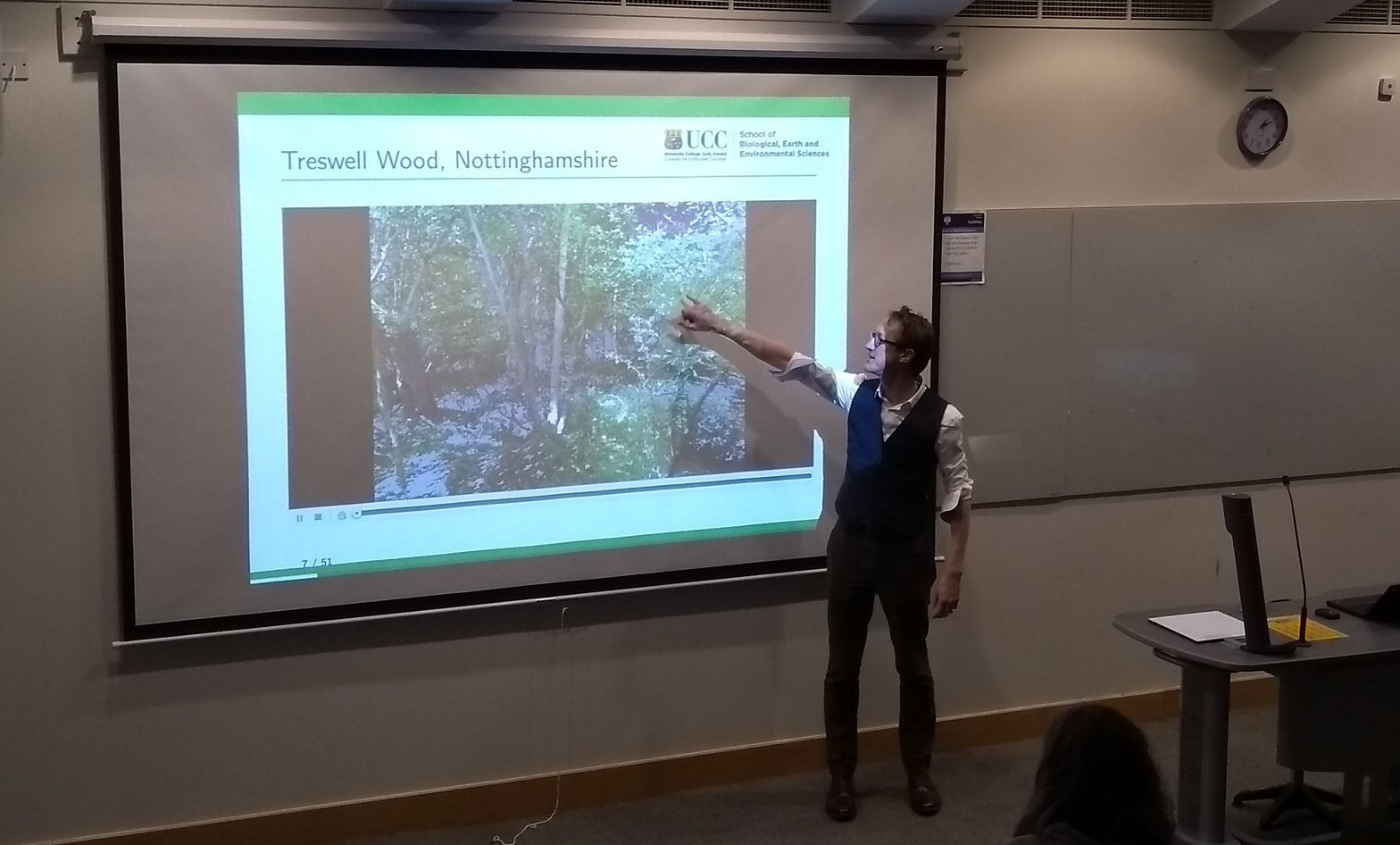
When selecting a title and writing the abstract for your submission, it’s essential to keep the audience in mind, and the primary audience is not who you might first assume. The one that matters is the scientific committee of the conference who will make the decisions over who gets to speak. It’s not, paradoxically, the actual audience of people who will attend your talk if you eventually get to the conference. That’s a second-order problem; first you need to get through the selection process.
Broadly there are three situations you might find yourself in. If you’ve been invited to submit an abstract then you’re under less pressure, but you still need to make sure that your proposed talk aligns with what the organisers were expecting from you(2). More commonly you’re either presenting work that has already been published and using the conference to promote it, or else you’re presenting something that you’re still working on and either using the conference as a testing ground or as a self-imposed deadline for completing the work. It’s the last of these that’s the trickiest to navigate.
If you already have a published paper (or submitted manuscript) then your job is relatively easy because you might only need a few tweaks to the word limit or to match the conference theme. More often though you’re writing something from scratch and this is where the advice becomes more useful. Why listen to me? I’ve sat on lots of academic committees for conferences, including one in the last month, so I have a fair idea of how decisions on who gets to speak are made.
- Align your talk with the theme, whether of the conference overall or the specific session you’re applying for. This can often be the deciding factor in abstract selection. For example, if you’re hoping to attend ATBC 2025 in Oaxaca, it’s necessary but not sufficient to be working in tropical biology and conservation. The theme of ‘Merging Diverse Actors, Approaches and Local Knowledge’ means that talks incorporating those features have a higher chance of success.
- Say something specific in your title. This is also a general rule for manuscripts, but for talks it indicates that you have a clear idea of your message. Instead of ‘Bird communities in Honduran forests’, go for ‘Habitat specialist birds decline over 20 years in lowland forests of Honduras’. Try to include a directional statement: things go up, or down, or move in a certain direction. Vague titles give reviewers the impression that you haven’t worked out your story yet and they’re usually not inclined to wait and find out.
- Don’t be too general. Unless you’re giving a plenary lecture, in which case you’re not reading this blog post, a conference talk is not the time to present your broad thoughts on the field of study. If you’re applying to SilviLaser 2025 then a talk entitled ‘Applications of remote sensing to forests’ is not going to be accepted because that’s the research focus of literally everyone at the meeting. Your 15-minute talk isn’t going to provide them with any fresh insight.
- Don’t be too specialised either though. This is a tricky balance to strike, but from the organisers’ perspective they are looking for a talk of sufficiently broad appeal that people will come to the session, or at least stay once they’re already there. Every entomologist at Ento2025 loves insects but a talk on the length of the stridulatory file of field crickets isn’t going to bring in the crowds unless you make it sing for them. Why should people care about your little corner of research? Every piece of scientific research is specific but placing it in context makes it relevant.
- Include quantitative information in your results. This might be the direction and magnitude of effects in an experimental study, the number of records in an observational study, or the counts in a meta-analysis. As with a specific title, this increases the confidence of the panel that you know what you’re going to say. These numbers can be amended before the conference takes place but they still have to sound reasonable.
All the above are ways to try to read into the mind of the academic committee for the conference, not the attendees. Why don’t the actual audience matter as much for your abstract? Well, here’s the secret: no-one reads conference abstracts(3). The vast majority of conference delegates pick which session to go to based on the overall theme, or might select a few talks based on their titles, but almost no-one is reading all the conference abstracts to decide exactly where to direct their attendance.
Once your talk is accepted this also takes some of the pressure off. No-one is going to hold you to account on whether the content of your talk exactly matches the submitted abstract. Everyone accepts that things can change — new data comes in, the analysis doesn’t quite pan out as expected, or a completely new interpretation might occur to you in the interim. This is all fine and part of normal science; responding to new evidence is a strength, not a weakness or admission of failure.
One thing that matters much less than many applicants expect is the seniority of the speaker. If you meet the minimum level for the meeting then you have as much chance as anyone. I’ve seen famous senior researchers declined by panels because they submitted sloppy and complacent abstracts. Seniority can also count against you because we all know by now whether Big Name Scientist is a good speaker or not and we might have heard it all before. Given the choice I will always pick a promising ECR over a well-polished greatest hits catalogue.
By and large scientific committees are on your side. They’re looking to put together the most exciting and engaging conference for people who are passionate about the same things that you are. Make them believe in you and then in a few months you could find yourself in a pleasant destination getting to display your enthusiasm on the stage.
(1) In this post I focus on talks because it’s where competition for slots is most intense. It’s also usually necessary to submit an abstract to present a poster but there are seldom the same constraints on numbers, as can be seen from the common practice of offering rejected speakers the opportunity to present a poster instead. I’m not going to get into which is better; both have their merits and it depends to some extent on the person.
(2) This comes from experience: I’ve had an invited conference talk declined after submitting an abstract which in retrospect was what I wanted to talk about and not what they were looking for.
(3) Unless you’re in a field where conference abstracts are published and recognised, in which case no-one reads them until after the conference has already taken place. In ecology they’re not considered to be publications.
 Trees In Space