
It all began with the best of intentions. By the time the Millennium Ecosystem Assessment was published in 2005, there was already strong evidence that the services nature provided to humanity were in decline, and our degradation and over-exploitation of nature was to blame. We were also acutely aware of rising extinction rates, and biodiversity had long been a cause around which world leaders were prepared to rally.
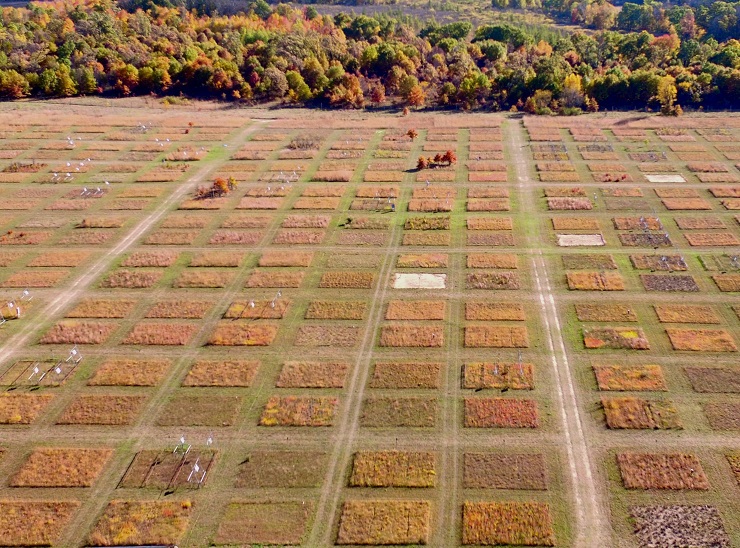
The missing piece of the puzzle appeared to be obvious: show that biodiversity was good for ecosystem functions and services, and the case for conservation could add raw self-interest to the mix. This was the foundation for thousands of studies of the biodiversity-ecosystem functioning relationship (often shortened to BEF).
In practice biodiversity was usually translated into species richness. This is of course reductive, but then species richness is often assumed to capture many other aspects of diversity, including traits, phylogeny, resource use and much more. This assumption is seldom directly tested for the set of species under study. Nevertheless it seemed to work. Early evidence of positive effects of species richness from sealed laboratory systems had been replicated in some the most ambitious field experiments in ecology, resulting in countless papers and a growing confidence that more species were a universal good. It also appeared that one of the key benefits was multifunctionality, which meant that the more species you had, the more services they were able to deliver. Everyone came to agree that biodiversity was one of the most important forces shaping ecosystem function. There was even emerging evidence that real-world patterns might be stronger than those in experimental systems, which made sense because we expected ecosystems to be structured in a way that made the roles of species complementary.
Ten years ago I published a textbook with a chapter on why diversity matters which presented this consensus. Prior to publication I sent it to a few colleagues who were active in the BEF literature and they gave it the thumbs-up. Everyone was agreed: more species were always a good thing.
At the moment I’m revising the textbook and finding that the last decade has not been kind to the consensus view. Every bandwagon eventually attracts a backlash, so this is not unexpected, but it creates a challenge for how to effectively synthesise the literature and present a clear story that allows readers to understand and engage with the evidence as it emerges.
First, even after thousands of studies, there is still enormous bias in the evidence base behind BEF research. Most studies are of plants, the main ecosystem function measured is simple productivity, and they are geographically located mainly in temperate zones. The evidence from aquatic systems (marine or freshwater), the tropics or non-invertebrate animals is slight. We should always be cautious about declaring a general rule for which the evidence is not yet general.
Then there’s the problem that experimental results haven’t replicated in the real world. Early reviews were unequivocal: biodiversity was always good, all the time. More recent studies in natural systems have found that while positive effects outweigh negative ones, actually the majority of studies find no effect at all.
To this we can add emerging evidence of ecosystem disservices. There are certainly ways in which biodiversity can be harmful to humans. In some of my own research we found that increased tree cover around rural villages was linked to greater risks of disease by supporting vector populations. Likewise in agriculture, the whole history of intensification has been one of deliberately reducing diversity in fields to boost the necessary service of crop production.
There are also critiques of the ways in which previous studies analysed their data which suggest that they may have over-stated the benefits of biodiversity. While not wanting to get into the technical details, it’s at least worth noting that the fundamental nature of the relationship has come under scrutiny.
Finally, the emerging picture is that species richness isn’t always the main correlate of functioning. Sometimes functional or trait diversity turns out to be more important, and species richness is only an indirect or imperfect means of capturing this. This then leads to another set of questions for which ecological theory leaves us on unsteady ground. Which traits matter, and why? There is a danger of circular reasoning if we end up picking traits because they affect ecosystem functions (try them all and see which works), or because they’re the ones we’re able to measure, without putting a deductive framework in place first. We could end up just creating a new set of problems for the next generation of ecologists.
For some groups of organisms there are standard sets of traits, most notably the Leaf Economic Spectrum for plants, which has been joined by the Wood Economic Spectrum for woody plants and some other developing initiatives. There is a different problem here though, which is that we find that particular environments select for a relatively narrow range of traits. If for example only plants with certain traits can survive in the desert, and deserts have low productivity, is it the environment or the trait diversity that limits productivity? Most ecologists would vote for the former. The pathways of causation become complicated and we need to reflect on whether trait diversity is the cause or a side effect of ecosystem functioning.
Where does this leave us? Perhaps we shouldn’t have expected nature to do any favours for us. We certainly haven’t reciprocated. Quite simply, nature doesn’t care about us. There are interesting fundamental questions to be asked about what structural aspects of natural systems are connected to ecosystem processes, but these need to be addressed without the distorting lens of of activism. There are also plenty of ways to justify conservation of biodiversity without making claims for its benefits to people. We might eventually find ways in which maintaining high biodiversity can be reconciled with our own self-interest, but for now I’m stepping off the BEF bandwagon and waiting for the fog of evidence to clear.
Addendum: make sure you read on to the comments below where some serious experts in BEF help to clarify the issues and provide some genuine insights. There was also an excellent discussion on LinkedIn which included a heap of recommended papers. If you’re as confused about BEF as I am then these are great starting points to find out more.
 Trees In Space
Hi Markus,
a few thoughts:
Having worked on BEF topic for the last 25 years, I would say that it was very clear early on that some ecosystem processes are much less responsive to changes in biodiversity than others, so I don’t think there has been a massive paradigm shift in that respect in this field. I agree with you that there is a lot of bias in this research, but we are working on it and have gained a much more detailed understanding of causes of variation in strengths and directions of BEF relationships by now. For instance, we still work a lot with plants, but moved beyond early studies on grasslands and accumulated by now a wealth of knowledge and understanding on BEF relationships in forests and how these relationships change over time. As in any field or ecology (or science in general), the more research we do, the more variation and context dependency we find, but BEF is not unique in this respect form other research fields. Here are a couple of recent reviews on the topic showing that BEF concept is not quite dead: https://www.nature.com/articles/s41559-025-02964-5 and https://www.nature.com/articles/s44358-025-00112-2. May be these could be useful for the chapter you are revising?
LikeLiked by 1 person
Hi Julia, first of all thank you so much for taking the time to respond in such a thoughtful and informative way. It’s a real privilege to hear back from a real expert in this area.
You’re right, my comment about Balavanera et al. (2006) was sloppy writing (or deliberately provocative, depending on your perspective). Their Figure 3 does however imply a strong positive effect across the majority of metrics and most people cite it for this. Rereading the paper now though I can see that they are much more nuanced in their commentary than I remembered so it was unfair of me to represent it as unequivocally positive.
I also agree with you in general about vote-counting. Unfortunately we take the evidence we have rather than the evidence we would like. Are you aware of anyone who has repeated this with a quantitative meta-analysis?
Finally, on the study from Thailand I think I got my papers jumbled up — it was a very long time ago — and I’d also be wary about revisiting them with too much confidence because I wouldn’t approach the analysis the same way these days. We did however find that land use change, particularly towards more diverse forested habitats, led to greater vector abundance and diversity. I’d have to to a little more digging to find the evidence doe you though. The paper by Manu Saunders does a much better job of defining ecosystem disservices with examples.
Thanks for the additional reading, I’ve been given a good few papers to read from feedback on this post elsewhere and have some more thinking to do. Once I have a new draft of the book chapter it would be great to get a critical review. Is there any chance I could send it in your direction? It probably won’t be ready for a few months.
LikeLike
As the author of the ‘vote counting’ paper, a few thoughts from my side as well. I do agree that vote counting has limits with the biggest one being that vote counting does not say anything about the ‘average’ response of studies (on say, plant diversity on plant biomass production). However, in my review I have tried to be very carful with the wording, by keeping the vote counting results close to the facts. Just to illustrate, to quite a few lines from the abstract: “The outcomes of 258 published studies, which reported 726 BEF relationships, revealed that in many cases, biodiversity promotes average biomass production and its temporal stability, and pollination success. For decomposition rates and ecosystem multifunctionality, positive effects of biodiversity outnumbered negative effects, but neutral relationships were even more common.”. I made the conscious choice not to e.g. claim that across all studies, biodiversity has an overall positive (or neutral or negative, for that matter) effect on biomass production, because I am aware that one cannot draw such conclusions based on my study. Even so, I do think it is a valuable and correct (rather than “deeply flawed””) observation that vote counting shows that across studies (which all have their strengths and weaknesses, but that were selected to satisfy to at least some quality criteria as described in my review), significantly positive relationships were often observed than negative ones, albeit still less infrequent than neutral relationships.
That said, I sometimes do wish that I had also performed a formal meta-analysis in my paper, and sometimes day-dream (but where to find the time?) of still doing it. It would cost a tremendous amount of time, especially because in the years since my publication, the literature on BEF studies in non-experimental studies probably more than doubled, but at the same time it would be extremely valuable. Perhaps I will attempt so in the future (to all the funders: please fund me for it!), but I am equally happy if someone else does. Because I very much agree with Julia that the “BEF concept is not quite dead”.
LikeLiked by 1 person
Hi Fons, thanks for commenting. Yes, it’s very easy to wish for a quantitative meta-analysis, and also for someone else to do it! My own inclination is to believe that if the answers coming in are equivocal then we’re probably asking the wrong question, and a more rigorous meta-analysis won’t fix that. Perhaps we need to step back and rethink what relationship we’re actually looking for. BEF is not quite dead but might need reframing.
The other thing I should say is that your paper is great and contains loads of useful data and insights irrespective of whether the vote-counting element was the best approach. It was definitely a valuable contribution to the literature.
LikeLike
Thanks Markus, I am glad to hear you like my paper.
Regarding the “what relationship we’re actually looking for”: that’s a tough question, and really depends on what we want to achieve as individual scientists, or as a field. Personally I get most excited about ‘upscaling’-related questions (because biodiversity is more just than species loss within plots that are the size of my desk or my office), and about how traits can be used to predict ecosystem functions (the idea that you ‘only’ need to measure a few traits from a species to understand how it contributes to the functioning of ecosystems, even though it’s often more complex than that. But those are just my personal preferences, and perhaps other directions (e.g. doing more interdisciplinary work to assess how humans actually do or do not benefit from biodiversity, or BEF links with crop systems, such as those Julia referred to) are more important for humanity.
I am curious though, if we currently ask the wrong questions, which ones do you think we should spend more efforts on?
LikeLiked by 1 person
Well now, that’s a question, and one I don’t have a definite answer to right at this moment! My meaning was more that we have framed the question too simplistically. We need to think carefully about the fundamental theory behind BEF and decide which variables best capture the processes we expect to find, or the scales at which we should be measuring them. BEF might still be out there but perhaps we’ve been looking in the wrong places.
LikeLike
small correction for last sentence of my first paragraph: I meant to say “significantly positive relationships were more often observed than negative ones, albeit still less frequent than neutral relationships”
LikeLike
Great post Markus and great comments above too. I agree it’s a messy field, with many biases in the literature, particularly the focus on plants – not uncommmon for ’emerging’ ecological concepts. I think the evidence is pretty clear that ‘biodiversity supports ecosystem function’ at the most general level, but this statement is highly nuanced and can be interpreted in many ways. I think part of the challenge is the vagueness inherent in the term biodiversity, and the ambiguity around communicating and defining the concept. Species richness always seems to be the first metric we jump to when we think of biodiversity and try and measure it or communicate about it, for lots of valid reasons. But when it comes to ecosystem function, interactions are a less recognised component of biodiversity that are more relevant to identifying EF, but are often harder to quantify and link to functional outcomes. I stopped following the literature closely over the last few years, because parenting etc., and trying to dive back into it is overwhelming when I see how rapidly it has grown in many directions! Comprehensive systematic reviews/meta-analyses are needed, but much more daunting now! From my own experience, I’ve also found a lack of interest from many funders to fund BEF research proposals (partly because it’s an inherently multidisciplinary field, which is often too messy/not sexy enough for funders), which would likely be another influencing factor on what gets published.
LikeLiked by 1 person
Thanks Manu, I’m in complete agreement. The issue of funding is an interesting one. It’s much easier to get support for proposals that have clear, intuitive expectations. BEF had those 20 years ago but I can understand why reviewers would be warier these days. Maybe we need to be breaking it down into more tractable and specific associations? I’m only spitballing though because I haven’t seen many BEF proposals in recent years, let alone written any myself.
LikeLiked by 1 person