Category Archives: Uncategorized

Of otters and scurvygrass

20190223_153551

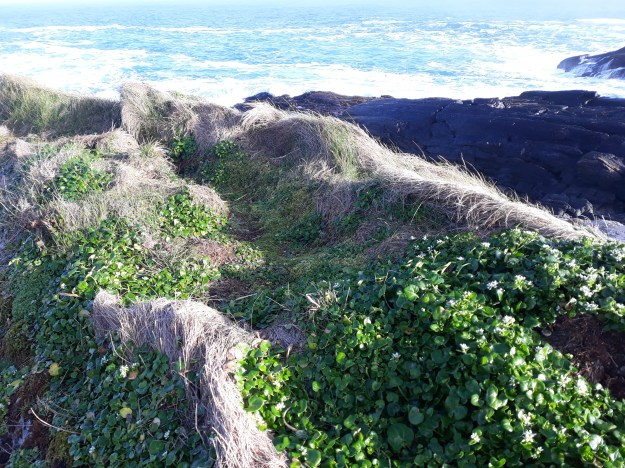
A dense patch of scurvygrass (Cochlearia officinalis agg.) in an area much frequented by otters based on the clear trails, spraint and crushed mollusc shells.

On a sunny February weekend I made a trip out to Bere Island (Oiléan Béarra), a short ferry-ride off the southwestern tip of Ireland, to investigate a peculiar botanical phenomenon. An old friend had called on me recently and enquired what the connection was between otters and scurvygrass (Cochlearia officinalis L.*). I confessed to knowing nothing about it and was slightly sceptical, but he was adamant that there was such an association, and wanted to show me in person. Any excuse for a field trip is welcomed so off I went.

Once there on the ground there’s no doubt about it. The otter haul-outs are very obvious, and invariably marked with scurvygrass. The plant does grow elsewhere, unsurprisingly, but never in such densities and with such luxuriant foliage as where they occur alongside otter signs. Whatever the otters are doing, the scurvygrass is enjoying it. A representative sample of rocky outcrops suggests that if you spot a patch of scurvygrass it’s clear indication that once you get up close there will be matching evidence of otters. Neighbouring outcrops lacking the plant are also devoid of otter signs.

It’s not only at the shoreline where otters leave the sea, and where their spraint or the remnants of smashed shells indicates favoured spots to hang out. Their tracks continue inland. Often after coming onshore the track leads directly to a freshwater pool, suggesting that they like to wash the salt water off their fur, then out the other side. They then wend their way through the grass and heather, apparently choosing to cross the island on foot rather than swim their way round.

This is where it gets even more interesting: in the midst of these fields, scurvygrass is only found on the otter trails. Elsewhere the sward is higher and there is no sign of the plant. Otters are clearly carrying scurvygrass inland and encouraging it to grow in places where it otherwise would not. This effect is only seen in fields which don’t contain livestock; cows and sheep have a tendency to share the same trails with otters and perhaps browse or beat down the scurvygrass. But on the old military firing range, where otters have the land to themselves, every one of their trails is peppered with patches of the plant.

20190223_155617

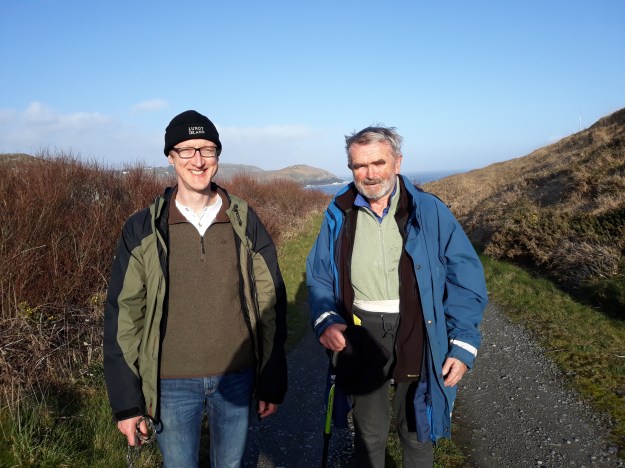
An inland otter track through a field with a dense grass sward. Scurvygrass can only be found along this trail.

On returning to the office I consulted the usual books to see whether I could find any record of this particular association, and drew a blank. Web searches, whether in the scientific literature or the internet at large, have also come up with nothing. So what is going on? I have a few hypotheses:

  1. It’s a coincidence. Any ecologist has to keep the null hypothesis in the back of their minds. Maybe this is pure chance, or else some unknown independent environmental factor dictates the combined presence of otters and scurvygrass. I haven’t done a randomised sampling design to demonstrate a statistical association, but often the evidence of your eyes is enough to tell you that there’s no need.
  2. Otter disturbance. Scurvygrass thrives in patches with frequent disturbance, and the constant to-and-fro of otters might open up denser vegetation in such a way that they allow it to enter. Perhaps scurvygrass is more tolerant of this kind of disturbance than other plants.
  3. Dispersal by otters. The seeds of scurvygrass don’t look like they are adapted for sticking to the sides of animals, which would be one mechanism. Do otters eat scurvygrass, and thereby carry the seeds with them, defacating them in freshly-disturbed areas that aid its germination? This is currently my favoured explanation, but I don’t know enough about the diet of otters to be sure.
  4. Saline environments. Perhaps all the salt water clinging to the fur of otters changes the soil at their haul-outs and along their trails, favouring the growth of a halophyte such as scurvygrass. This is possible, but not entirely plausible given the presence of patches quite a way inland and even after they’ve taken a freshwater bath. Soil samples might resolve this. There are also no other halophytes which show the same pattern.
  5. Otters go where the scurvygrass is. Maybe they like the feel of it on their paws? It’s unlikely to be that they’re feeding on it, otherwise you would expect to see less scurvygrass in the places they use most frequently, while the opposite appears to be true.

Have I missed anything? Is this a known phenomenon that my friend has independently discovered? I’d be interested to hear from anyone who knows more about this in the comments. For now it’s only a small mystery, but also an intriguing natural history observation, and a reminder that people who walk outdoors and watch the world around them carefully often spot patterns that professional ecologists in their offices would never find.

20190223_161335

Credit to Bere Island resident Maurice Neligan for spotting this interesting pattern.


* This is as close as I can get to an exact species identification. Stace notes (in the 3rd edition; I don’t have the latest one just yet) that C. officinalis is highly variable, an aggregate of several likely species, and also freely hybridises with C. anglica and C. danica, especially in Ireland.

UPDATES!

As ever, Twitter provides a wealth of insights from other botanists. Here are the pick of the suggestions:

The first can be summarised as ‘disturbance + fertiliser’, the second with the twist of extra salinity, which might not be important given observations elsewhere. But scurvygrass isn’t only found where spraint occurs. It’s also along trails, some of which are quite steep, and any spraint is likely to roll or blow away pretty quickly. Otters may be marking trails with urine which could have a similar effect. Scurvygrass is also found right at the point at which otters emerge from the sea. I can’t help thinking that there must be a dispersal element to the story as well. This seems to be supported by another sighting of scurvygrass associated with birds:

There’s only one thing for it — we need to do some experiments! This may not be the most important project on my list but it makes for an enjoyable distraction.

Why should anyone care about Ugandan lianas?

Liana_group

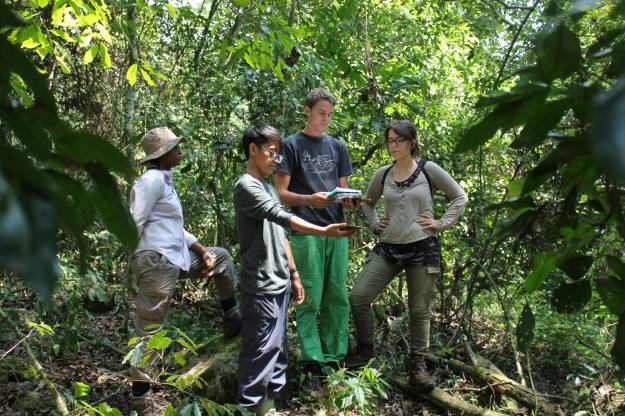
The liana team surveying in 2015 (Takuji Usui, Julian Baur and first author Telma Laurentino). Bridget Ogolowa (far left) did not participate in the study. Photo by Line Holm Andersen.

Habent sua fata libelli as the Latin epithet puts it, meaning ‘little books also have their destinies’. I’d like to think that the same is true of papers. Not every scientific publication appears in a major journal, or attracts media attention, or becomes a highly-cited classic. Some, perhaps, are never read again by anyone. This doesn’t mean that publishing them wasn’t valuable. A paper represents a new piece of knowledge or insight that adds to our total understanding of the world. And in some cases its small part in the greater whole is the main reason why it matters.

As an example, our latest paper just came out in African Journal of Ecology, a minor regional journal with an impact factor so small (0.797 in 2017) that in the metric-obsessed world of Higher Education it barely registers. Some would argue that the effort of publishing in such a low-status journal is a waste of time*. Why bother?

In this case, our study — small and limited in scope as it was — adds an important point on the map. Over recent years it has been noted that the abundance of lianas is increasing in South American forests. This process, sometimes known as ‘lianification’, is troubling because lianas can impede the growth of forest trees, or the recovery of forests following disturbance (including logging). At a time when we need forests to capture carbon from the atmosphere, an increase in the abundance of lianas could be exactly what we don’t want.

The causes of this increase in lianas are unknown, and it is also uncertain how widespread the effect might be. The best evidence that it’s happening comes from neotropical forests**, but we can’t be sure whether the same process is occurring in Southeast Asia, or Sri Lanka, or Africa. If the driver is global one, for example a change in the climate (warming, higher carbon dioxide concentrations, or longer dry seasons) then we would expect the same trend to be occurring everywhere. If it’s a purely local effect within South America then it might reflect historical factors, modern disturbance or the particular composition of plant communities.

It’s not just that we don’t know whether lianas are increasing in all parts of the world simultaneously; for most forests we don’t even know how many lianas were there in the first place. We could only find evidence of four published studies of liana abundance in the entirety of Africa, of which two were in secondary or transitional forests. That means only two previous studies on the continent had measured lianas in a primary forest. If we want to monitor change then we first need a starting point.

aje12584-fig-0001-m

Location of our study in in Kanyawara, Kibale National Park, Uganda. Figure 1 in Laurentino et al. (2018).

What did we find? Actually it turns out that liana densities in our forest were quite similar to those seen elsewhere in the world. An average liana basal area of 1.21 m2/ha is well within the range observed in other forests, as are the colonisation rates, with 24% of saplings and 57% of trees having at least one liana growing on them. These figures are unexceptional.

What does this tell us about lianification? To be completely honest, nothing. Or at least not yet. A single survey can’t say anything about whether the abundance of lianas in Africa is increasing, decreasing, or not changing at all. The point is that we now have baseline data from a part of the world where no-one had looked before. On their own these data aren’t particularly interesting. But considering the global context, and the potential for future studies to compare their work with ours, means that we have placed one more small piece in the jigsaw. And for the most part, that’s what science is about.


CODA: There’s another story behind this paper, because it came about through the awesome work of the Tropical Biology Association, an educational charity whose aims are capacity-building for ecologists in Africa and exposing ecologists from species-poor northern countries to the diversity and particular challenges of the tropics. Basically they’re fantastic, and I can’t recommend their courses highly enough. The work published here is based on a group project from the 2015 field course in Uganda and represents the first paper by three brilliant post-graduate students, Telma Laurentino, Julian Baur and Takuji Usui, who did all the real work***. That alone justifies publishing it, and I hope it’s only the first output of their scientific careers.


* A colleague at a former employer once memorably stated in a staff meeting that any journal with an IF of less than 8 was ‘detritus’. This excluded all but a handful of the most prestigious journals in ecology but was conveniently mid-ranking in his own field.

** Although this might be confounded by other factors — look out for a paper on this hopefully some time in 2019.

*** I also blogged about the liana study at the time here.

Reviewing my reviewing hours

Imacon Color Scanner

Review wherever and whenever you can. Astronaut Shannon Lucid reading on the Mir Space Station in 1995. I have no evidence that she was reviewing, but it’s possible. Source: NASA.

The life of an academic involves an awful lot of reviewing, such that the constant stream of critical judgements can exact a mental toll. Quite apart from how we feel about this part of our work, another issue is how do we fit it all in? We are frequently expected to review manuscripts, post-graduate theses, grant proposals, job and promotion applications, and often to tight deadlines. This is in addition to the normal assessment cycle of undergraduate degree students that forms the core of our business.

Having recently started a new job and a family, I’ve been trying to set a few ground rules for how I would like to restructure my routine. Part of this involves developing a better work-life balance. This is necessary given that for the last few years the work-work balance has been hard enough. I am aiming to be on campus for no more than 40 hours a week, Monday to Friday only. That this is framed as an ambitious target is itself an indicator of how unhealthy my relationship to work has been in the past.

For the first month it’s gone well, but that’s due in part to the light workload I’ve been granted during my first semester. Gradually, however, I’ve noticed a pile building up in the corner of the office: all my reviewing. This week I had to take a day off sick and the first thought that crossed my mind was “Oh good, I can catch up on the reviews”. Is my mindset unhealthy as well?

Over the last 15 years I’ve got used to the idea that reviewing is something that happens outside work, preferably at home in a comfortable chair in front of the stereo. This means it happens almost exclusively at evenings or weekends. I have generally found it to be a relaxing activity for this reason, and that trying to review while in work only makes me agitated about all the other jobs I ought to be doing with that time. When I draw up my list of jobs for the day, the reviewing gets deferred until later.

Am I unusual in my working practices? There’s only one way to find out: ask Twitter!

I can understand why reviewing during normal working hours should be seen as the default. It is part of our role and the expectations of an academic life, and therefore counts as our day-to-day activity. If it’s work, do it at work. But based on an admittedly small sample size, a majority of fellow academics don’t agree, or at least don’t follow this argument through in practice.

Why might we not review during office hours? For the most part we volunteer to take on the reviews, and our employers rarely if ever pay us for it. From their perspective it’s something to tolerate rather than encourage given that we could be writing another paper, working on a grant proposal, teaching some students, or dealing with the endless flow of administrative chores. Every time we say yes to reviewing a paper it costs them some of our time and therefore their money. Yes, this is a cynical view of higher education, but I worked in UKHE for a long time so you should expect that.

When we are paid to review — mainly for some grant-awarding bodies, or as external examiners — it’s not our employers who foot the bill. This is additional income and therefore feels to as though we should be doing it in our own time. Once again we have chosen to take on this additional work, and while we probably don’t do it for the money (which barely compensates), the presence of a cash incentive does change our perception*.

I put down the final option of travelling because I know a number of people who deliberately use what would otherwise be ‘dead time’ to catch up on reviewing tasks. If you have a long commute on public transport, or spend lots of time in airports or hotels, this is the kind of work that can be done anywhere. I suppose then the question is what else you might do in that time, such as reading for pure pleasure or catching up on sleep. Is reviewing while travelling a way to continue working during normal hours, or an extension into what ought to be a time to relax? If we don’t take work home then does that imply that any time outside the home can be used for work?

How am I going to resolve this? Well, today I’m working at home, and getting some reviews out of the way in the process. I’d be interested to hear how others fit their reviewing commitments into a normal working routine.


* The Swiss national funding agency sends its reviewers boxes of chocolates by way of thanks, which is a nice touch, and has no bearing on the quality of my reviews because I don’t much care for chocolate.

Diary of an academic mid-life crisis

RIMG3256

I won’t be needing these any more.

In a few weeks I’ll be moving to a new position at University College Cork in Ireland, in the wonderfully named School of BEES. This entails moving home, family and job to another country. Combined with the recent birth of our son, it has been a summer of upheaval, reflection and transformation. It’s a chance to reconsider who I am and what I aspire to do with the remainder of my career. In short, I’m having an academic mid-life crisis.

After 13 years at Nottingham, occupying the same office the entire time, I’ve accumulated a lot of detritus. The last few weeks have been long process of throwing away many things that I don’t need (reprints, project reports, old posters), giving away others (books, consumables) and whittling down the remainder until I only retain what I think I’ll need. After carefully preparing a list of my career objectives, the criterion for whether I pack something into a box is whether it will directly help me to achieve those goals.

This seems like an obvious strategy, almost trite. But the urge to retain only what I need comes into conflict with the things I might keep ‘just in case’ or because they have some sentimental value. For example, should I keep hard copies of the PhD theses of former students? I have them in electronic form, and the only reason they’re on the shelf is for display. I literally don’t need them.* But looking at them fills me with fond memories, so into the box they go.

The other and most difficult set of decisions surrounds datasheets and specimens. Some of these have been in my possession for 20 years or more. Simply being aware of them raises pangs of guilt that they have never given rise to the publications that would reveal them to the world, not that the world would show a great deal of interest either way.** My rule has been that if I haven’t touched them, have no intention of ever using them, and can foresee no future role for them, then they go in the skip.

The idea of disposing of data or specimens provokes a visceral feeling of dismay among scientists. All that work, the long hours in the field, the grant money spent in obtaining them, and it’s come to nothing. No wonder that people have tried to stop me:

Scanning is a nice idea but there are simply too many. I would be spending days that I don’t have stood in front of the scanner, collecting files that will then sit instead on a hard drive and be ignored for another decade or two. Time is my most precious resource and using up more of it on lost causes is Concorde fallacy.

Even in the most optimistic scenario, if I kept the files, what might happen? I would spend still more time entering and analysing the data, then writing and submitting a manuscript, which even if published would simply add to the growing mountain of mediocre and unimportant science that lies unread, uncited and uncared for. It’s not only my time but that of several editors and reviewers. With the best will in the world, these data probably don’t deserve to be published. There are bigger and better things I want to do.

There is an even more powerful case for throwing these old projects away, and it comes down to my mental health. A new job is an opportunity to make a fresh start, to redefine myself. It’s a chance to shed some baggage that I acquired during my PhD, added to over the course of a few post-docs, then shoved in the corner of my office and ignored.

In the same way as there are positive reasons for retaining possessions, such as the warm glow an old PhD thesis gives, there are also negative ones. Data can go bad, and after a while it begins to influence your mental health. I don’t need the guilt to follow me any longer. It doesn’t need to cross the Irish Sea with me, and reminders of previous failures don’t need to take up space in my office or on my hard drive. Some projects are also bundled up with more personal recollections of the people or events they were associated with, and which make them even harder to return to. I’m not the person I was then; I’m not the scientist I was then either.

So away it goes. I can tell myself that I no longer care about the canopy heights which orang utan occupy as they go through rehabilitation; the frequency of leaf damage types in different rain forest environments; the distribution of sub-canopy scrub pine in Russian forests; succession in herbivore exclosure plots on the island of Lundy. It was all interesting to me once and, to be honest, it still is. It was all worth doing at the time and I don’t regret it. But enough is enough.

I’ve got some big ideas and several exciting projects that I can’t wait to start. I’ve made space for them now and I’m looking to the future. Wish me luck.

RIMG3242

For some reason I still had four pre-viva copies of my doctoral thesis. Four! One for me, one each for the examiners, and one spare… All now in the bin.


* The only time they come down is to show a current student the overall structure of a thesis. That’s a very limited task and one that could be accomplished by showing them almost any thesis.

** There is the remote possibility that someone might read the appendices of one of my minor papers and demand to see the physical evidence. This is a moral reason for retaining specimens but not, to my mind, a strong one. It happens so seldom in the career of any scientist (and never yet to me) that I doubt it will ever occur. And one day I will inevitably die, retire or leave science, at which point they will be lost regardless. Pretending that anyone will mourn the specific loss of my collections is just vanity.

Trumpets are meant for blowing

brassband

The Second Line Social Aid and Pleasure Society Brass Band perform at the Boston women’s march, as captured in an excellent article by Amelie Mason which shows exactly how a trumpet can be more than just a musical instrument.

A man walks up to a brass band, and asks one of the musicians whether he can buy her trumpet. Confused by the request, the musician replies that she wasn’t planning to sell the instrument, but could be persuaded for the right price. She asks why the man is so keen on buying her trumpet. Is he perhaps a musician himself? “Oh no,” the man responds. “I only want it for the brass.”

I’d like to use this analogy to think about the value of a university education. The story is adapted from Bertolt Brecht’s Messingkauf dialogues, a series of observations and parables on theatrical theory that he began in 1938 but never finished*. Brecht was making a point about the differing criteria of value that might be held by an artist and their audience.

Right now is a good time to have this conversation, just as undergraduate students are about to find out their exam results. Soon our graduates will be launched into the job market and have to sell their capabilities to potential employers. To employ a metaphor that Brecht didn’t intend, they will have to blow their own trumpets. This does however depend upon them still having trumpets and knowing how to use them.

Throughout his career, Brecht was obsessed with the idea of how theatre could be used as a means of instruction. Sometimes this was an explicit aim, for example in his Lehrstücke, or learning plays. Other times it was intended to be subliminal, distracting the audience while ensuring that their subconcious absorbed the intended message**.

The challenge was that audiences don’t go to the theatre to learn something. They are there to be entertained, to relax, to see what all the fuss in the newspapers is about, to associate themselves with a political faction, or as a signifier of their intellectual credentials. Over dinner or in the workplace they could then tell friends and colleagues “Oh yes, I went to see that Brecht play the other night,” and offer some personal observations.

Surely, you might think, the problem for an academic isn’t the same as for a playwright or our trumpeter. The audience have come to university to learn. We perform in some way, whether that’s through lecturing, tutorials or other pedagogical forms. While we try to make our lectures engaging and entertaining, the performative aspects are very much secondary. The message is the important element; what we want to say is what the students want to hear.

Except that it isn’t. In a university, teaching is always taking place. Students are there because, by and large, they want to learn the material and pass their exams. This is not always for the intrinsic value of knowledge, although having some passion for the discipline certainly helps. Rather they need evidence that they have moved some material. They absorb, recite, then obtain a reward for having done so. For a brief period they have been the bearers of information which can be returned and assessed.

This is of course a cynical viewpoint and not meant as an insult to the many committed, dedicated students who care deeply about the subjects they study. But the commodification of higher education encourages them to think as customers. Teaching is simply part of the compact: we deliver information, they demonstrate that it was received, we get paid.

And how much brass can you get for a degree? Helpfully, the Institute for Fiscal Studies have produced a report where you can find out exactly how much previous graduates have benefitted from sitting a particular subject at a given university. This is being circulated as a tool to help students make an informed decision on how best to spend the loans they receive in order to pay for their tuition. It gets worse though; the UK government is determined that this be used as a measure of value-for-money, and even as a stand-in for teaching quality. These are evaluations based on brass, not music.

We understand the sinking feeling of the trumpeter every time a student asks us what they need to know to pass the exam, how to get a first in our module, or whether the assigned reading is compulsory. We feel it when our students select modules based on the previous cohort’s grades, whether the lecturer is perceived as a ‘hard’ marker, or if the assessment is of their preferred type (exams or coursework). We see it when the conversation about supporting a student begins not with “I want to understand this subject more deeply” but “I need to get a 2i”***. I don’t blame them for taking this approach; they have been led to believe that this is the purpose of a university education.

When academics teach material, we do it not for the necessity of saying something (although lecturers, like musicians, still need to get paid). We want our audience to feel something, to respond to the narratives we weave, and to act accordingly. When we fail to move them to value the story behind the information, something has gone wrong: with our own abilities as teachers, with a system that encourages purely functional attitudes towards learning, with the willingness of the audience to see beyond the original reason they might have turned up.

A university education is more than just a certificate that can be leveraged to obtain a better salaried job. If that’s all a graduate does with their degree then they are in the same place as our fictional trumpet buyer. Perhaps that’s all they wanted all along, which is itself a shame. But that’s not what got me into doing this job. I’m here for the music.


* I have of course modified it for didactic reasons, but that’s surely just being a good Brecht disciple. The original is Dialoge aus dem Messingkauf, and Messingkauf can be translated as ‘buying brass’.

** To a modern audience these efforts can seem forced or inappropriate, but at a time when the arts were being deployed by fascists for political indoctrination it was essential that the left fought back with its own tools. In universities we’re not playing for the same stakes.

*** For non-UK readers, a 2i (or ‘two-one’) is an upper second-class degree. In most universities it represents an average mark of around 60%, and shows that the student has learnt enough to have a basic understanding of the subject. A number of graduate employers stipulate this as a minimum requirement. It’s roughly equivalent to a 3.0 GPA in the North American system.

It’s not easy being a tree

adult_bridge_dress_forest_girl_grass_heels_model-928773

I’m a beautiful tree! AAAGH GET THOSE CATERPILLARS OFF ME CCO Public Domain

Imagine you’re a tree. I’ve not been to a mindfulness class, but I’m aware that this is one of the standard exercises, or at least common enough to have become a stereotype*. I’d like to challenge the fundamental premise though because, when you think about it more closely, being a tree is not particularly relaxing.

Consider the life of an average tree. At any given moment its leafy tissues are being assailed by herbivores, while its woody parts are forever at risk of attack from a range of fungal pathogens. Below ground it doesn’t get any easier — parasitic nematodes swarm its roots. The life of a tree is one of being constantly eaten alive.

Meanwhile the tree is engaged in complex trading relationship with a range of mycorrhizal fungi with their own separate interests. Through these it exchanges hard-won carbon for nutrients, which it decides how to invest to meet its short- and long-term goals. The immediate aim is to survive, making defences crucial, but it can’t neglect growth, otherwise its competitors will swiftly crowd it out. And it has to have some left over at the end to produce flowers and fruits. Reproduction is costly; pollinators won’t visit without some nectar to draw them in, and seed dispersers expect a reward for carrying fruits around. You always have to pay the couriers.

Are you sure you want to be a tree now? It’s not all about swaying in the breeze, feeling the warm sunlight on your leaves, and focussing on your inner strength. That sunlight needs to be converted into cold, hard carbohydrate-based currency, and there’s a lot of business to be done before winter (or dry season) cuts you short. You need to make enough to live off your savings for a large part of the year. And even trees don’t live forever — you’re only one storm, wildfire or beaver away from being struck out of the game.

Just thinking about it is making me stressed. So let’s take another viewpoint — what would a tree make of our human lives?

They might be quite jealous. We spend large amounts of time sitting down in front of glowing rectangles, which provide us with a surplus of resources to spend on leisure activities and relaxation. We barely have any parasites at all. If we want to mate, we get to choose our own, and can move directly to them. There’s no need to barter with insects, or release our hopes into the breeze. We actually get to meet our offspring, and know that they succeeded. Best of all, if we need food, we just steal it from a plant that went through all the actual effort of making it.

In short, being human doesn’t sound that bad after all. I feel much better about it now. Who’d be a tree?


* In poking fun at the tree exercise I’m not seeking trivialise the value of mindfulness. Workplace stress is recognised as a health concern by the WHO, and everyone should educate themselves on how to support their own mental health as well as that of colleagues and employees. Nevertheless, reducing the risks of mental illness depends on identifying and dealing with the root causes; stress management exercises can help but they’re not enough on their own.

Ecology has a harassment problem

john_waller_in_pillory

Hurling rotten vegetables at a perpetrator in the stocks might make everyone else feel better, but it’s not enough on its own. Image source, original credit unknown.

The #MeToo storm has yet to fully strike in ecology, but it’s coming, and we should welcome it. There will be allegations, likely against some of the leading and pivotal figures in our field. We will have to work hard to protect and support those who come forward, while ensuring that our standards and practices change to reduce the chances of anyone else being forced to endure the same experiences. We will also need to learn as a community, and guard against the assumption that recriminations are the conclusion of the process. Calling out bad behaviour is essential, and often cathartic, but ultimately we should be judged on how we make ecology better for those who come after us.

I’m writing this in response to a recent post on the Methods in Ecology and Evolution blog, in which Bob O’Hara ponders whether ecology has a problem. This was in turn triggered by allegations made by a statistics researcher about two prominent people in her field, who were subsequently named by others, and which come at the end of a year in which many brave women have stepped forwards to speak out against the way they have been treated.* This article in Marie Claire is also essential reading, and includes comments on ecology in particular.

That it has taken an international movement to trigger recent introspection is not to our collective credit. Many of us knew about the problem earlier, and did not act. We bear responsibility for this, and the current wind of change should be seen as a long-overdue corrective.

Does ecology have a problem? Absolutely. I would go further, and say that ecology as a discipline has systematically created the conditions in which sexual harassment thrives. Like most other scientific fields, we have conferences, and research groups often contain power dynamics that favour senior figures, usually men. But there’s more to it than that.

All around the world, ecologists of various tribes have established remote research stations, observatories and camps. These in turn are often staffed by wardens or resident scientists. Due in part to the structural inequalities within science, but also to the profile of people willing to take on such roles, these staff are predominantly male.

The stations are also visited by a stream of junior researchers, sometimes formally as students, but often as volunteers or field assistants. A large proportion of these visitors are female; this again reflects the make-up of our field at the undergraduate student level. There’s no doubt that some wardens view this as one of the perks of their otherwise difficult, poorly-paid and under-valued jobs. I’ve heard them say as much.

The harassment triangle of inequality and isolation is then completed with the final element: inebriation. On an offshore island, or in the middle of a nature reserve, there’s little to do in the dark evenings other than drink, and there is usually a plentiful supply. Alcohol is an excellent social lubricant. Often it reduces inhibitions; sometimes people do things they regret. Sometimes this can be exploited.

I know personally of some appalling incidents, which I cannot share because they were told to me in confidence, and that should always be respected. Not everyone feels able or willing to speak out, and we mustn’t expect them to. Instead we should look critically at ourselves and ask how we have created a culture in which keeping quiet is seen as a necessary response. Given the sheer numbers of women who report being harassed or assaulted in the field, this is a shame we should not bear silently.

Of course the vast majority of researchers act with absolute professionalism, and many consensual, long-lasting relationships have started through fieldwork, including a few of my own. Don’t bother citing these as counter-examples though. If you believe that they negate the pressing need for action then you’re still part of the problem.

In writing this, I’m not casting stones because I’m personally blameless, or because I want to claim any moral high ground. I have said and done some extremely stupid things, usually after drinking. My only weak defence is that they were the result of being oblivious, not through exploiting my status. Nevertheless, I have implicitly contributed towards an atmosphere which has not always been as inclusive and protective as it should have been. Where I have gone wrong, please tell me, both so that I can apologise and also so that I can improve. In a community that has clearly failed many of its members, none of us should escape without taking responsibility.

What can we do to prevent further harassment happening? Calling out past behaviour and signalling that our community will not tolerate it is a vital step. Policies and statements are important indicators; these are valuable but also need to be enforced and reflected in behaviour. There is evidence that harassment occurs less frequently at field sites where such policies both exist and are respected. Most of all, we need to listen. I have a lot more to learn in this area, and will be grateful for any comments on this post that help me (and others) to do so.**

Finally, if you are one of the people directly culpable of harassing junior researchers, know this: we are watching you. The scandals are coming to ecology. I just hope that we are not found wanting in our response.


* This is of course not exclusively an issue affecting women, and the same power dynamic can lead to harassment and abuse in a variety of contexts. Any action we take collectively must be fully inclusive and respect the rights of all members of our community. Here are some numbers:

10.1371%2Fjournal.pone.0102172.g003.png

Respondents to survey by Clancy et al. (2014), their experiences, and who were aware of, made use of, and were satisfied by mechanisms to report unwanted physical contact while on fieldwork. Figure 3 from original paper.

** As an established male researcher, who is implicitly responsible for creating the present culture, how can I feel any right to write this post? My answer is that we all have a part to play in demonstrating that we have taken notice and are willing to change. Further reading from people who know a lot more than me:

Clancy, K. B. H., Nelson R. G., Rutherford J. N. & Hinde, K. (2014). Survey of Academic Field Experiences (SAFE): Trainees Report Harassment and Assault. PLOS ONE 9, e102172. link

Nelson R. G., Rutherford J. N., Hinde, K. & Clancy, K. B. H. (2017). Signaling Safety: Characterizing Fieldwork Experiences and Their Implications for Career Trajectories. American Anthropologist 119, 710–722. link

How representative of ecology are the top 100 papers?

The publication in Nature Ecology & Evolution of the 100 most important papers in ecology has led, inevitably, to a fierce debate. Several rapid responses are already in review. The main bone of contention has been that not only were the first authors of 98% of the papers male, but the only two papers written by women were relegated to the very bottom of the list. In a generous reading this reflects implicit biases at every stage of their compilation, rather than any malign intent on the part of the authors*, but I’m sure they’ve received plenty of feedback on this oversight.

Pretty soon after it came out, Terry McGlynn on Twitter asked:

https://twitter.com/hormiga/status/930194024182321152

If you want a guide to all the essential papers that didn’t make the list, and happen to have been written by women, this thread is a good place to start. I’m not going to fan the flames any further here, but it’s important that this glaring omission remains the headline response. Instead I’m going to respond to another observation:

https://twitter.com/GrunerDaniel/status/930269079293833216

This pricked up my senses, given that I am also an undergraduate textbook author. In writing the Natural Systems book (published 2016) I made a deliberate attempt to not cite the same things as everyone else, and to emphasise promising directions for the future of the field of ecology. That made me wonder: how many of the 100 most important papers in ecology did I manage to cite? Note that I had no input into the Nature Ecology & Evolution article, and the book only includes references up to the end of 2014, so these form entirely independent samples. Without formally counting, I estimate that I’ve read around 80% of the top 100 papers, and I’m aware of almost all of them.

How many? Only 17/100 papers.** That raw figure disguises some interesting discontinuities within the list. Of the top ten I actually cited six, and a total of nine from the top twenty. This indicates a reasonable amount of agreement on the most important sources. But of the bottom 80 I only managed another eight (10%). This comes from a total of over 800 sources cited in the book.

Why did I cite them? The main reasons:

  • Posing an important question we have since spent a long time trying to answer (Hutchinson 1957, 1959, 1966, Janzen 1967).
  • Defining a new idea which remains relevant (Grinnell 1917, Gleason 1926, Janzen 1970, Connell 1978).
  • Creating a framework which has been elaborated since (MacArthur 1955, MacArthur & Wilson 1963, Tilman 1994, May 1972, Chesson 2000, Leibold et al. 2004, Brown 2004).
  • Reviewing the evidence for an important principle (Tilman 1996).
  • The first empirical demonstration of an important idea (Tilman 1977).

In many cases I have cited the same authors from the top 100 multiple times, but not necessarily for the original or classic piece of work; often it’s a later review or synthesis. This is because I deliberately chose citations that would be most helpful for students or other readers, not always on the basis of precedence.

The aim of this post is not to argue in any way that the authors of the paper were wrong; this is only a reflection of my personal opinion of what matters in the field. Theirs was generated through the insights of 147 journal editors and a panel of 368 scientists from across the discipline, and is therefore a much more genuine representation of what opinion-makers within the field of ecology believe (although there are better ways to conduct such an exercise). Mine is only one voice and certainly not the authoritative one.***

Writing a textbook is something like curating an exhibition at a museum or art gallery. It bestows on the author the responsibility of deciding which pieces to show in order to tell a particular story. Of necessity this becomes a very personal perspective. I’m amused to find that my view of ecology overlaps by only 17% with the leaders in my field.**** That doesn’t make either of us right or wrong, only that we must be looking in very different directions.

As for their aim of creating an essential reading list for post-graduates or those wishing to learn the foundations of the field, here I profoundly disagree. The best way to learn about current practice in ecology is to start with a good core textbook (and there are lots more out there), read recent synthetic reviews, or pick over the introductions of papers in the major journals. In the same way that you don’t need to read Darwin to understand evolutionary theory, or Wallace to understand biogeography, it’s not strictly necessary to read Grinnell, Clements or Gause to get to grips with modern ecology. Fun if you have the time but most people have more important things to do.

One final comment: three of the top ten papers in ecology were written by one man, G. E. Hutchinson. There is no doubt that his work was highly influential, and I agree that these are important papers to read. What I find most interesting though is that all of them are essentially opinion pieces that frame a general research question, but go little further than that. None of them would get published in a modern ecological journal.

Where would you find similar pieces of writing today? On a blog.


UPDATE: Dr Kelly Sierra is soliciting suggestions for a more inclusive list. Whether or not you feel that such lists have any inherent value, if we’re going to make them then they should at least represent the full diversity of our scientific community.


* In the comments below, Jeremy Fox points out that this isn’t very well worded, and could be read as a suggestion that I think there was some malign intent. So, to be absolutely clear, I am not suggesting that the authors made a deliberate choice to exclude or devalue papers written by women. If anything this was a sin of omission, not of commission, and we all need to learn from it rather than attribute blame to individuals.

** As an aside, 16 of the 17 were sole-authored papers. Only Leibold et al. (2004), which defined the metacommunity concept, had more than one author.

*** Nor do I think it’s healthy for there to be a voice of authority in ecology, or any other academic field. We make progress through testing every argument or piece of evidence, not by accepting anyone’s word, however senior or trustworthy. If there were an authority figure you can almost guarantee that I would disagree with them.

**** I’m more in line with the recent attempt to define the 100 most important concepts in ecology, although a little peeved that so many people dismissed Allee effects given my recent work on them.

Are conkers getting smaller?


RIMG3118

A selection from this year’s unimpressive crop of conkers.

It’s a sign of age to notice that many things appear smaller than they used to be: chocolate bars, coins… and conkers.

Hold on. Conkers? Surely the same trees, growing in the same places, can’t have suddenly started producing smaller fruit? Well it seems that they have, and I’m not the first to notice, although hard data on sizes over time has proven elusive. Even so, it’s pretty obvious to me that this year’s crop provides relatively few conkers that would be worth putting on a string. One wonders how the Conker World Championships (and yes, they do exist) are going to respond to this threat*.

Conkers come from the horse chestnut tree, Aesculus hippocastanum (I have a video about it). It’s not native to the British Isles, coming instead from the Balkans, although like many immigrants it has embedded itself in the culture of these islands such that it would be strange to imagine it not being here. There are something like half a million horse chestnut trees in the UK, but they aren’t often found in our woodlands. The overwhelming majority are planted in parks and urban streets, and therefore we encounter them frequently in our daily lives. They also naturally spread into disturbed habitats around towns such as railway sidings or abandoned land.

In the last few years horse chestnuts have started to suffer from two problems. One is the horse chestnut leaf miner, a species of moth that was first discovered in 1985 in northern Greece, and only described as a new species the following year. It then spread rapidly throughout Europe, reaching the UK in 2002, and since then has reached all parts of the country. This is the main reason why the foliage of horse chestnuts starts to turn brown in August (or sometimes even earlier), long before it would naturally begin to yellow at the onset of autumn. The caterpillars actually live inside the leaves, eating away at the green tissue while protected by the tough upper and lower layers.

The leaf miners aren’t a risk to the tree’s survival — afflicted trees still generate a fresh flush of leaves the following year. What the leaf damage does, however, is to restrict the resources available to trees just when they’re getting round to producing the year’s crop of conkers. For a tree, the year is like a marathon; they spend many months storing up energy, biding their time, and around the end of August launch into their sprint finish, culminating in the release of thousands of fruit. The arrival of the leaf miner is like hobbling them halfway through the race. They can still make it to the line, but they don’t have enough energy left for the grand finale.

RIMG3114

Evidence of the leaf tunnels created by the horse chestnut leaf miner. This tree is right outside my building, and every tree on campus looks much the same.

If your trees have leaf miners, then there are some things you can do, such as removing the leaves that fall and composting them, burying them (at least 15 cm / 6 inches deep) or, if it’s the only option, burning them. This will kill the pupae of the moth which are overwintering, but it won’t prevent reinfection from other trees in the neighbourhood, which is highly likely to occur. Some birds such as blue tits have learnt to recognise and eat the leaf miners, but this is unlikely to control them effectively because the main damage is done later in the summer once the fledgelings have already left the nest, so there is less feeding pressure.

This isn’t the only issue affecting horse chestnuts though. A new disease known as horse chestnut bleeding canker was discovered around ten years ago, and is now also widespread. It may have infected around half of British horse chestnuts. This causes scars on the stem which ooze sap. Not all trees are killed by the disease; some survive, while others might be immune. Nevertheless, many trees are weakened by it, and a number have already died. This hidden problem might also be part of the reason why our trees are struggling to produce conkers of the same quality as before.

There is some debate over whether the two problems, the leaf miner and the bleeding canker, are related to one another. Some early experiments suggested that seedlings with leaf miners were more vulnerable to the effects of the disease, but more recent and large-scale surveys have found no association between the two. The balance of evidence at the moment therefore indicates that they are independent problems. There is at present no cure for the disease, although some very recent work published earlier this year implies a role for the bark microbiome in regulating the severity of the disease.

A citizen science project has been tracking these new arrivals throughout the UK, and in 2013 found that parasites of the leaf miner have been catching up. This is good news, as it might mean that natural biological control could eventually restrict the impact of the miners.  They are still asking for data and there are lots of nice resources on the website which could be used in classrooom teaching to engage schoolkids in observing an interesting phenomenon**. Children might not be able to play conkers in quite the same way, but why not use this as an excuse to teach some exciting ecology!


* Interestingly, the game of conkers predates the arrival of the horse chestnut tree in the UK, and was formerly played with snail shells or other objects. This would imply a rather radical shift in the modern rules though.

** You should also look at the OPAL national tree health survey, which involves recording observations on a whole range of trees as well as horse chestnut.

What’s the worst that could happen?

Picture 099
I’d be happy to never have to fly in one of these ever again.

I never intended for the expedition to end with me pulling one of my students out of a river after a packhorse fell on top of them while crossing. We were in Kamchatka, Far East Russia, one of the remotest corners of the world, surveying forests. This was to be our last day in the field. We had just broken camp and begun the day-long hike back to the village where we would collect our samples, have a farewell party and make our way back to the UK. Instead we ended up requiring a helicopter evacuation and spent much of our remaining time dealing with Russian hospitals and insurance claims.*

On the other hand, we had planned for this. Well, not for this precise eventuality, but we knew what to do when it happened. Actually our Plan A failed, but we were sufficiently well-prepared that Plan B came through. This played a major role in ensuring that the student in question returned home safely and made a full recovery.**

At this time of year the thoughts of many ecologists turn to where they will be next summer as they begin putting together grant applications. This is therefore the right time to start planning not only for the fun parts — where you’re going, what data you’ll be collecting, who will be coming with you — but also asking what’s the worst that could happen, and being fully prepared. It’s your responsibility to keep your team safe, even if sometimes they don’t like being told.

I sit on the grants committee of the British Ecological Society. If you’re applying to us for funding in the current round, you’ll notice that there’s a box for you to comment on safety planning. This is not merely a procedural step. I’ve been known to shoot down proposals where there has clearly been inadequate consideration of the hazards involved in a project. You don’t need to have direct personal experience of the site or procedures (although that helps), but you do need to convince us that you’ve taken good advice and planned accordingly. Why should funding bodies care about your risk assessment? Apart from a genuine concern that fieldwork is conducted with high safety standards, there is also a potential reputational risk if a trip that we’ve financed goes badly wrong.

Picture 113
Hey, don’t judge the quality of the plaster cast. It did the trick for as long as we needed it to.

My experience comes from not just living through a crisis on an expedition, but participating in or leading a large number of trips in which nothing serious happened. There were problems and near misses, and we learnt from them. I’m also on our university panel for assessing remote field trips from many different faculties. We have people working in war zones, refugee camps, polar ice-caps and coral reefs. It’s rare that any location is declared entirely unsafe to work in (but check the latest warnings from the FCO); with good planning we’re happy to send people almost anywhere. So here are some general guidelines.

1. Know the rules: the Royal Geographical Society no longer publish their excellent Expedition Handbook in hard copy, but the good news is that the chapters are freely available online. This includes six chapters on Health and Safety; there’s much more good advice elsewhere on the website. If you’re in the UK then the regulatory standard for activities outside the UK is BS 8848. This is the legal standard by which you can expect to be judged if anything goes wrong, so make yourself familiar with this.

2.  Training: having someone with medical training is essential. This doesn’t need to be to professional standards; there are specific courses that cater for the types of situation you’re likely to encounter on expeditions, as well as guidance on what you need to know. It’s just as important to know how to deal with the trivial stuff as it is to recognise when you need to call for help or evacuate. This is a level much higher than a normal workplace safety course. First Aid training is intended to help you keep someone alive until the ambulance arrives, ideally within the hour. If the ambulance isn’t coming you’ll need a higher level of competence. I would ensure that at least two people are trained, not only in case one of them gets injured, but because when you do have to look after a casualty it helps to have several people taking turns.

Also consider leadership training, especially if you haven’t had much expedition experience. I’ve not done any of these courses but a quick online search suggests that there are plenty out there.

Picture 174
Any ambulance is super if it turns up.

3. Insurance: most holiday travel policies will not cover a remote casevac (casualty evacuation). You need to make sure that you have specific cover for the activities you’re doing and the full costs of evacuation and medical care. I’m lucky that our university provides this, though only on condition that we meet stringent standards for our planning.

More to the point, a helicopter won’t even take off without being certain that someone is going to pay them. They don’t fly on goodwill and hope. Just as important as having the insurance is knowing who to call to access it, and making sure that the agencies coming to your rescue know that you’re a paying customer. Find out where the helicopter station is (or the coastguard, or whoever you’re relying on for rescue), and it does no harm to drop in right at the start of the trip and let them have your location and insurance details.

4. Get advice. Within the UK, the Foreign and Commonwealth Office travel guides are a useful first point of reference. Others who have been before you will be a trove of useful insights, including things you perhaps haven’t thought of yet.

Most importantly, always talk to locals. They will have the greatest awareness of specific hazards and how to deal with them. For example, I don’t worry overly much about brown bears in Kamchatka because I know that in the areas where we work, they won’t have encountered many people, and the only ones they will have seen are hunters. This means that they’re relatively timid: they run away if they hear you coming, and they avoid our camps. I would be much more cautious in Yellowstone, where bears are habituated to the presence of humans and associate us with food. Bears are always a risk but how you respond to this depends very much on the local context.

5. Buy the right equipment. We didn’t have satellite phones in Kamchatka because it’s still a militarised zone and they’re banned. We did, however, carry an EPIRB (Emergency Position Indicating Radio Beacon), and while these are more common on ships, there are lightweight ones that fit easily in a rucksack. You’ll need to register it first with your local in-country agency and check on the regulations for wherever you’re going. Another alternative is the SPOT messenger, which are small and easy to carry, but global coverage isn’t quite complete. I would strongly recommend having multiple methods of summoning help, and even with all this modern technology, I still insist that everyone on my teams carries whistles and flares.

6. Complete your risk assessments and ensure everyone has read and agreed to them. Your workplace will have a safety officer, an agreed procedure and a set of standard forms. Moan as much as you want about this — everyone does — but don’t let that get in the way of actually doing it. The process exists to protect you, your colleagues and everyone working with you. Don’t omit any local guides, staff and collaborators: they also have a role to play in overall safety. (As an illustration, our accident was directly caused by the local guide.)

7. Do you have a code of conduct and sexual harassment policy? If not then you are placing members of your team at risk, so you need one, then demand that everyone has  read and understood it, preferably by forcing them to sign a form.

8. Follow through: risk assessments often make noble claims about how they’re going to keep in touch with people back at base, fill in log-books, text GPS locations on a daily basis, call a named contact at the same time every day… all these promises. Some of them are overkill, and I’ve stopped believing many of them. Safety planning isn’t there just to satisfy your insurers, and it shouldn’t be forgotten the moment you get to the field. Make time to role-play a casevac as part of the on-site induction, then conduct regular self-assessments and checks throughout your trip.

Most of all, remember that safety planning isn’t about removing risks altogether, but knowing how to reduce them and cope when the worst happens. Our story had a happy ending, and has since been used in courses as an example of best practice, but only because the groundwork had been put in place long beforehand. Start now.


* Here’s a newspaper report from the time; it’s not wholly accurate but you get the picture.

** Kim is now completely fine. As evidence, here’s a recent photo of them quite deliberately putting themselves in harm’s way:

DJB1EBiXYAALdU_
Honestly Kim. Will you never learn?