Tag Archives: writing

How to write a PhD thesis. Part I: Saving Time

My aim in this series is to explain the things that are often in plain sight but not always to the person that most needs to know. Image by Randal Phoenix.

Amongst PhD students it’s unsurprising that the thesis becomes the subject of obsessive attention. The thesis is, after all, the one absolutely essential output of the program, the final product, the main focus of assessment. Everything else is nice-to-have but not actually required for graduation1.

There’s another point of view though, which is that the thesis is actually the least-important output you’ll produce. As soon as you’ve passed the viva it doesn’t matter. The chances are that no-one will ever read it again. The fact that you have a PhD implies that a thesis exists somewhere but your potential as a researcher will be measured in actual publications2. This is why, as I’ve argued elsewhere, the thesis only needs to be good enough to pass. It doesn’t have to be perfect. It’s not the defining statement of your career. You need a thesis; you don’t need a great thesis. Don’t create something that’s a joy to read when it’s only being sent to an audience of two people3.

This is why I counsel against the danger of thesis-gazing, which is when an inordinate of time is spent on trying to craft the perfect thesis for your own satisfaction rather than directing effort towards the parts that will actually count. Focus instead on the elements that will have an impact on your future career, the chances of an easier ride in the viva, and for the actual progress of your field as a whole. Crafting a thesis that flows in a cohesive narrative arc might be satisfying but it’s not necessary. A student who slings together a bunch of loosely-connected studies and sticks a cover on it, but who also gets several papers out at the same time, is going to have a better chance of landing a post-doc position. Your future employers will not read your thesis but they will read your CV and publication list.

The main idea I’d like to get across in this post, and the ones that follow, is the importance of marginal value. You have limited time, no matter what stage of your degree you’re at. Invest in the things that will make a difference now and in the future, and cut corners wherever you can get away with it. This will reduce the pressure you place on yourself.

Here are the three things you can probably save time on4:

  • Final discussion. Quite frankly, no-one cares about this. In this concluding chapter you aspire to draw all the threads of your various studies together. The aim is to convince the reader that it did all actually make sense, you found something worthwhile, and has wider importance and implications. The truth is that your examiners have already made their mind up by the time they reach the discussion. A great discussion will not rescue a thesis if the data chapters have been below par. Likewise a bad discussion isn’t going to change their minds, and if they don’t like it then they can ask for amendments. Most likely is that they will run out of time before the viva, give it a skim read, and not worry too much. Leave this until last and run it off in a couple of days (no more than a week).
  • Appendices. A thesis chapter is a manuscript that needs to go on a diet. Publishing it requires you to remove all the fat: supplementary analyses, digressions on individual observations, excessive literature citations and endless waffle. It’s already too long. Then there are the other things you did on top, which probably took a lot of time, but which don’t quite fit into the chapter. So you think: let’s have an appendix. This appears to be a cost-free solution. It will also have absolutely no impact on the quality of your thesis or the outcome of the viva. If there’s something you can’t bear to leave out then you could have an appendix. Or you could put it in a shoebox and bury it in a bog where it has a higher chance of being found. Time spent preparing and formatting the appendix is generally wasted.
  • Rants. You’ve spent a long time thinking about this one thing. It’s been your whole life for the last few years. In the course of this obsession you have developed Opinions. And someone needs to hear them. Whether it’s that a major paper in the field is wrong, or a method is flawed, you’re about to unleash. Unfortunately only two people will read it and the internal examiner won’t care. The external will either disagree, which creates a problem in the viva, or perhaps already agree. Maybe, in the best case scenario, you might actually change their mind. Fantastic! That’s a lot of effort to shift one person’s opinion, and probably not worth it. Write an angry blog post instead or start an argument on Bluesky.
  • General introduction. This one is likely to spark some disagreement from other academics because writing a general introduction is an essential step in the grad student journey. But if the point of the general introduction in the thesis is only to explain and justify your research questions then it doesn’t need to be highly polished. Put the real effort into the chapter introductions because there’s a good chance of those being turned into manuscripts. The counter argument is that the general introduction is the first thing examiners read and it’s worth giving them a good impression. I do agree with this. Make the introduction coherent and authoritative, but it’s not going to make-or-break your thesis. If you miss something out then your examiners will tell you and it’s an easy correction to make.

I’ve been direct supervisor for a dozen completed PhDs and acted as tutor or advisor to countless others. Every single one said that they want to publish their general introduction as a review paper. Maybe this is one of those post-grad myths because I’ve never seen it happen. Instead students can spend an inordinate amount of time crafting what amounts to a lengthy attempt to demonstrate that they’ve read (and cited) everything of potential relevance to their PhD. It’s good experience but look at it in terms of return on effort. I’ve examined theses with finely crafted introductions and made no comments on them at all, then given the students a hard time because their data chapters were sub-standard. I’ve also read theses with cursory introductions followed by a series of self-contained manuscripts. The latter had a much easier ride.

In my next post I’ll move onto the things that are often under-valued by many students, but where you can reinvest the time saved by decreasing emphasis on the above. Or just take the weekend off, you probably deserve it.


1 There are some countries where a publication, or at least a submitted manuscript, is required before the PhD can be awarded.

2 Or, depending on your field, software tools on GitHub, patents, new species, DNA sequences… all sorts of things that might be picked up and used by others. Unlike your thesis.

3 My experience is with theses in the UK and Ireland, and I know that there is variation between systems, but in all cases the likely audience for a thesis is in the low single figures.

4 I’m going to put one caveat in here, which is that working on something unimportant can be treated as productive procrastination, or help build up momentum for the important writing to come. This can be true but can also be used as a convenient excuse. Instead of bulking up the thesis, why not write something that someone might actually choose to read?

Why you should (almost) never write a negative book review

Negative book reviews are great fun to read. There’s a dark delight to be found in a comprehensive take-down of a book, especially if you side with the reviewer. The Schadenfreude is even more delicious if you happen to dislike the book’s author. It’s a guilty pleasure but I’m not going to deny that it’s still a pleasure. Notable examples include the demolition job on Boris Johnson’s life of Churchill, the fierce rebuttal of Michael Behe’s misleading account of the impossibility of evolution, or the Amazon reviews of the worst photo album ever. You finish reading each of these feeling not only happier but wiser(1).

With all that in mind, I strongly believe that you should avoid ever writing or publishing a negative book review. I was a book reviews editor at a journal for around 10 years and of the hundreds of reviews I handled, only a smattering were negative. I regret publishing all of them and openly apologise for my role in bringing them into the literature(2). Years ago I wrote a negative review myself, for a different journal, and the editor made the shrewd decision not to publish it, for which I remain grateful.

My current opinion on negative reviews is shaped by being a book author myself, and recognising the amount of time, sacrifice and personal investment that goes into bringing a book into publication. Even a bad book. Even, quite frankly, an utterly irredeemable and worthless book. If you haven’t written a book yourself then you should take pause before criticising anyone who has. They at least had the personal drive to create something and place it before the world.

Writing a bad review carries costs for the author, and also costs for you. On the author’s side, you are damaging their reputation and (potentially) their income(3). The more people read your review, the fewer are likely to buy the book, and the author will become known as having produced a bad book. If this is an early-career researcher, or their first book, the results can be devastating for a career. There is a name on the front of the book, it’s a real person, and your comments are inevitably directed at them. The greater your reputation and status, the more harmful your critiques become.

On the other hand, beyond the time and energy required to write a bad review, there are also further costs to the reviewer. You become someone who writes mean reviews, and we can all make judgements about the type of person who criticises others in public. Even if no-one challenges you openly, there’s a good chance that you will lose friends or reputation in the process. Whether or not I agreed with them about a particular review I would think twice about collaborating with someone who was willing to write a negative book review (this is a decision I have acted upon).

There are features of a book which make it bad, at least to you as a reader, but which don’t deserve a bad review. These include that the book was poorly written, you disagree with the conclusions, you have a personal dislike of the author (however well-founded), or that there are mistakes on points of detail.

In all these cases, there’s a simple thing you can do, which is to not write a review. No-one is forcing you to. If you’ve been invited to review a book then you can decline, return any commission fee, and just walk away. Consider the sage advice of every grandmother that if you have nothing nice to say then you should say nothing. Over the years a few reviewers came back to me with variants on this. If the book is simply bad then there’s no point in giving it the attention that comes from a review. Just let it fade away, unread and unrecognised, amongst the thousands of books that are published across the world every single day.

There are a few exceptional cases where a negative book review might be warranted, so it’s not an absolute never, but there are specific and stringent conditions. These include:

  • The author is rich, famous and established, and well able to stand up for themselves. For example, I would have no qualms about criticising someone like Richard Dawkins in print. This could however be a reason not to write a bad review because people with deep pockets and reputations to defend can fight back, so proceed with due caution.
  • The book is catastrophically, dangerously wrong. Here the facts and evidence have to be absolutely clear, independently verifiable and iron-clad beyond being subject to interpretation or opinion. A book disputing the public health benefits of vaccination, or denying the negative effects of climate change, needs to be stamped on in any available outlet. Mistakes or differences of opinion don’t count; the required level is that of putting lives at risk.
  • The book has implications or conclusions that are themselves dangerous. This is slightly different to the above, as it accepts that the book might have contents that are defensible or at least open to interpretation. For example, the notorious book about human intelligence The Bell Curve contained data on IQ that were not themselves incorrect(4). The real problems were the assumptions made about what IQ actually measures, ignorance of the enormous amount of prejudice embedded in the test, and the lessons that were drawn from an analysis of inherently biased data. The problem with eugenics is not so much that it gets the genetics wrong, it’s that genetic arguments are used to advance causes which are themselves morally reprehensible(5).

Even if one of these applies, ask yourself a few questions before doing so. Are you the right person to be writing the review, and can your status or credentials protect you against any possible backlash? Do you have a vested interest, meaning your case could be undermined by accusations of bias? Might there be any legal consequences to the criticisms you are making if they could be construed as defamatory or damaging to the author’s livelihood? Are there other more informal avenues to responding to this book which won’t attract the same repercussions? Most of all, are you completely sure that you are right and able to defend every word in your review? Even if all these things are true the possible costs of being behind a negative review might outweigh any benefits that come from its publication.

If you do find yourself desperate to write a negative book review then my advice is to follow the same procedure as for angry letters. Take the time to write your best, most thorough and damning indictment of the book. Then file it away and move on with the rest of your life. It’s not worth it.


(1) There are some which verge on the spiteful, such as this recent takedown of Ocean Vuong, which are pure entertainment.

(2) A general apology is largely performative so if you’re reading this and feel like you deserve a personal one for something that I’ve published then I am very willing to do so and to make amends if possible.

(3) Although not as much as you might think. Most authors are lucky to receive 10% of the cover charge of a full-price book, and often only after various fees have been paid off. Most of us don’t write books for the money. Nor for the fame. Or the career benefits. In fact, writing books is one of the least well-remunerated things you can choose to do with your professional life.

(4) Please do not read this as in any sense a defence of The Bell Curve, a disgraceful and appalling tract used as a crutch by racial eugenicists. The issue isn’t whether you can measure and analyse differences in IQ, because obviously you can, it’s whether or not you should.

(5) This is not to say that eugenic theory didn’t misunderstand or misrepresent population genetics, so much as that its early proponents included enough elements of fact to appear reasonable and defensible. Hindsight is a hanging judge but in the 1950s the evidence was more mixed and the space for what was considered acceptable interpretation was broader. There’s no excuse for it now.

How to write a conference abstract

In the northern hemisphere the leaves have opened on the trees, the migrants have returned, and the thoughts of researchers turn to which conferences they plan to attend. This is therefore often when we begin submitting abstracts to apply to give talks at meetings(1). It’s usually a competitive process — there are many more conference delegates than speaking slots — so some form of selection has to take place.

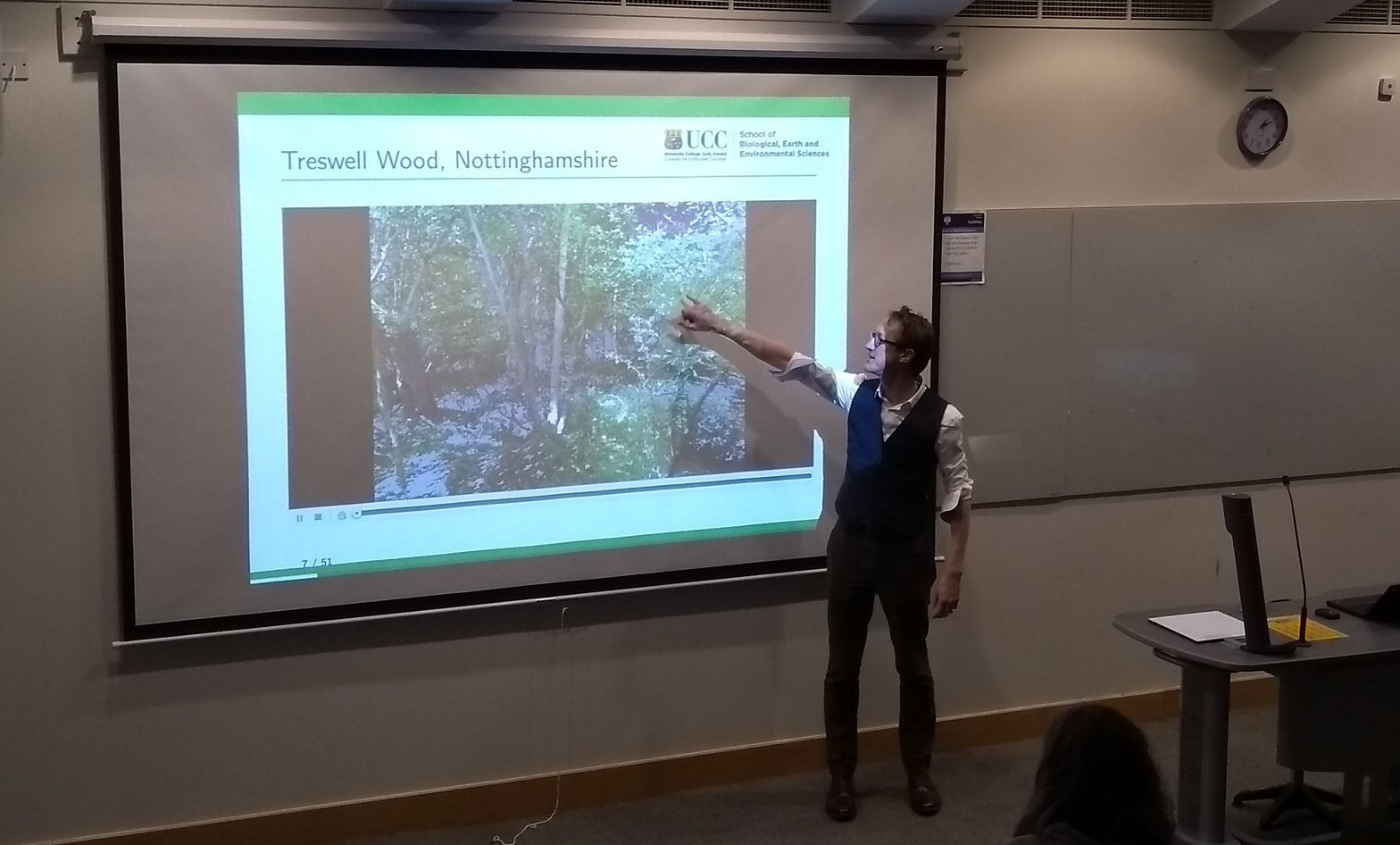
Evidence that I also give talks occasionally, although a lot less frequently than I used to, mainly because I’m not the one directly doing the research any more.

When selecting a title and writing the abstract for your submission, it’s essential to keep the audience in mind, and the primary audience is not who you might first assume. The one that matters is the scientific committee of the conference who will make the decisions over who gets to speak. It’s not, paradoxically, the actual audience of people who will attend your talk if you eventually get to the conference. That’s a second-order problem; first you need to get through the selection process.

Broadly there are three situations you might find yourself in. If you’ve been invited to submit an abstract then you’re under less pressure, but you still need to make sure that your proposed talk aligns with what the organisers were expecting from you(2). More commonly you’re either presenting work that has already been published and using the conference to promote it, or else you’re presenting something that you’re still working on and either using the conference as a testing ground or as a self-imposed deadline for completing the work. It’s the last of these that’s the trickiest to navigate.

If you already have a published paper (or submitted manuscript) then your job is relatively easy because you might only need a few tweaks to the word limit or to match the conference theme. More often though you’re writing something from scratch and this is where the advice becomes more useful. Why listen to me? I’ve sat on lots of academic committees for conferences, including one in the last month, so I have a fair idea of how decisions on who gets to speak are made.

  1. Align your talk with the theme, whether of the conference overall or the specific session you’re applying for. This can often be the deciding factor in abstract selection. For example, if you’re hoping to attend ATBC 2025 in Oaxaca, it’s necessary but not sufficient to be working in tropical biology and conservation. The theme of ‘Merging Diverse Actors, Approaches and Local Knowledge’ means that talks incorporating those features have a higher chance of success.
  2. Say something specific in your title. This is also a general rule for manuscripts, but for talks it indicates that you have a clear idea of your message. Instead of ‘Bird communities in Honduran forests’, go for ‘Habitat specialist birds decline over 20 years in lowland forests of Honduras’. Try to include a directional statement: things go up, or down, or move in a certain direction. Vague titles give reviewers the impression that you haven’t worked out your story yet and they’re usually not inclined to wait and find out.
  3. Don’t be too general. Unless you’re giving a plenary lecture, in which case you’re not reading this blog post, a conference talk is not the time to present your broad thoughts on the field of study. If you’re applying to SilviLaser 2025 then a talk entitled ‘Applications of remote sensing to forests’ is not going to be accepted because that’s the research focus of literally everyone at the meeting. Your 15-minute talk isn’t going to provide them with any fresh insight.
  4. Don’t be too specialised either though. This is a tricky balance to strike, but from the organisers’ perspective they are looking for a talk of sufficiently broad appeal that people will come to the session, or at least stay once they’re already there. Every entomologist at Ento2025 loves insects but a talk on the length of the stridulatory file of field crickets isn’t going to bring in the crowds unless you make it sing for them. Why should people care about your little corner of research? Every piece of scientific research is specific but placing it in context makes it relevant.
  5. Include quantitative information in your results. This might be the direction and magnitude of effects in an experimental study, the number of records in an observational study, or the counts in a meta-analysis. As with a specific title, this increases the confidence of the panel that you know what you’re going to say. These numbers can be amended before the conference takes place but they still have to sound reasonable.

All the above are ways to try to read into the mind of the academic committee for the conference, not the attendees. Why don’t the actual audience matter as much for your abstract? Well, here’s the secret: no-one reads conference abstracts(3). The vast majority of conference delegates pick which session to go to based on the overall theme, or might select a few talks based on their titles, but almost no-one is reading all the conference abstracts to decide exactly where to direct their attendance.

Once your talk is accepted this also takes some of the pressure off. No-one is going to hold you to account on whether the content of your talk exactly matches the submitted abstract. Everyone accepts that things can change — new data comes in, the analysis doesn’t quite pan out as expected, or a completely new interpretation might occur to you in the interim. This is all fine and part of normal science; responding to new evidence is a strength, not a weakness or admission of failure.

One thing that matters much less than many applicants expect is the seniority of the speaker. If you meet the minimum level for the meeting then you have as much chance as anyone. I’ve seen famous senior researchers declined by panels because they submitted sloppy and complacent abstracts. Seniority can also count against you because we all know by now whether Big Name Scientist is a good speaker or not and we might have heard it all before. Given the choice I will always pick a promising ECR over a well-polished greatest hits catalogue.

By and large scientific committees are on your side. They’re looking to put together the most exciting and engaging conference for people who are passionate about the same things that you are. Make them believe in you and then in a few months you could find yourself in a pleasant destination getting to display your enthusiasm on the stage.


(1) In this post I focus on talks because it’s where competition for slots is most intense. It’s also usually necessary to submit an abstract to present a poster but there are seldom the same constraints on numbers, as can be seen from the common practice of offering rejected speakers the opportunity to present a poster instead. I’m not going to get into which is better; both have their merits and it depends to some extent on the person.

(2) This comes from experience: I’ve had an invited conference talk declined after submitting an abstract which in retrospect was what I wanted to talk about and not what they were looking for.

(3) Unless you’re in a field where conference abstracts are published and recognised, in which case no-one reads them until after the conference has already taken place. In ecology they’re not considered to be publications.